
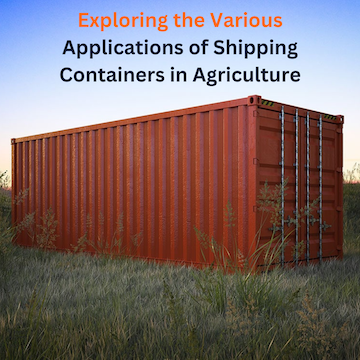
In recent years, the agricultural industry has witnessed a major transformation in the way farmers and businesses operate. As the need for efficient and sustainable farming practices grows, innovative solutions are being used to solve storage, production, and logistics challenges. One solution gaining popularity is the use of shipping containers in agriculture.
Modern Farming Needs Flexible Space
Shipping containers can be adapted for growing, storing, transporting, and selling agricultural products, making them a practical option for farms, growers, and agricultural businesses.
1 Vertical Farming
Shipping containers provide an ideal environment for vertical farming, a practice that involves growing crops in stacked layers. With limited arable land and growing demand for fresh produce, vertical farming provides an innovative solution for farmers and food businesses.
Shipping containers can be transformed into controlled indoor environments with customized lighting, temperature, and humidity controls. This allows crops to be grown year-round, regardless of external climate conditions, which can increase productivity and reduce water usage.

2 Mobile Farms
The mobility of shipping containers makes them perfect for mobile farming operations. By retrofitting containers with hydroponic or aquaponic systems, farmers can create self-contained mobile farms that can be transported to different locations as needed.
This flexibility allows farmers to optimize crop production, adapt to market demands, and explore new markets without the need for major permanent infrastructure investments.
3 Seedling Nurseries
Shipping containers can serve as efficient seedling nurseries, providing an optimal environment for young plants to thrive. With carefully controlled conditions such as temperature, humidity, and lighting, containers offer a protected space for germination and early growth.
This approach allows farmers to produce high-quality seedlings that can later be transplanted into the field, leading to improved crop yield, better consistency, and more uniform plant growth.
4 Crop Storage and Preservation
Proper storage and preservation of crops are vital for maintaining quality and reducing waste. Shipping containers can be modified to create cold storage units where temperature and humidity can be regulated to preserve harvested produce.
By using containers for crop storage, farmers can reduce post-harvest losses, extend the shelf life of perishable goods, and minimize the need for chemical preservatives. This can be especially helpful in remote or underserved areas where traditional storage infrastructure may be limited.
5 Farm-to-Table Markets
The growing demand for locally sourced produce has led to the rise of farm-to-table markets. Shipping containers can be transformed into modular marketplaces, giving farmers an on-site retail space where they can sell products directly to customers.
These containers can be equipped with refrigeration units, display shelves, and even cooking facilities, creating a complete farm-to-table experience. This helps farmers build direct customer relationships, increase profitability, and reduce the carbon footprint associated with traditional supply chains.

6 Water Collection and Irrigation
Water scarcity is a major concern in many agricultural regions. Shipping containers can be used to collect and store rainwater, providing a sustainable water source for irrigation purposes.
By integrating water collection systems with container-based farms, growers can reduce reliance on traditional water sources, lower operating costs, and support water conservation efforts.

7 Watch Container Farming Ideas
A video can help show how shipping containers can be turned into efficient growing spaces, storage areas, and agricultural systems.
Final Thoughts
The agricultural industry is continuously evolving, and the adoption of innovative technologies and practices is essential for long-term sustainability. Shipping containers offer a versatile and cost-effective solution to many challenges faced by farmers and agricultural businesses.
From vertical farming and crop storage to mobile farms and water collection, these adaptable structures can help farmers optimize operations, increase productivity, and reduce environmental impact. As demand for sustainable agriculture continues to grow, the applications of shipping containers in farming are likely to expand even further.
Need a Container for an Agricultural Project?
Storage Containers To Go can help with containers for farming, storage, modifications, mobile setups, crop protection, equipment storage, and custom agricultural uses.
Contact Storage Containers To Go