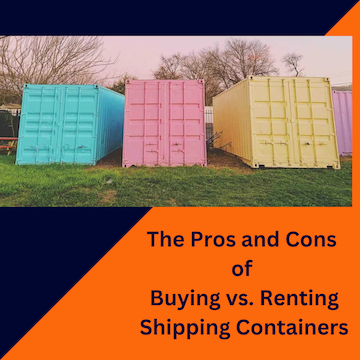
Shipping containers have become increasingly popular for storage, transportation, job sites, business use, and even alternative housing. But if you are considering a container, one question comes up quickly: should you buy or rent? This guide breaks down the pros and cons of both options so you can make a smart decision based on your budget, timeline, and project needs.
There Is No One-Size-Fits-All Answer
Buying is usually better for long-term use, customization, and ownership. Renting is usually better for short-term needs, flexibility, and lower upfront cost.
1 Quick Comparison
The best choice depends on how long you need the container, how much you want to spend upfront, and whether you need to customize it.
Buying a Container
Best for customers who need long-term storage, want full ownership, plan to customize the container, or want to avoid recurring rental costs.
Renting a Container
Best for customers who need temporary storage, want lower upfront costs, need flexibility, or are not sure how long they will need the container.
2 Pros of Buying Shipping Containers
Buying a shipping container can be a smart investment when you know you will use it for a long time or want more control over how it is used.
Long-Term Cost Savings: Avoid Recurring Rental Fees
If you have a consistent and ongoing need for storage or transport, purchasing a container eliminates recurring rental expenses. Over time, owning a container can be more economical than renting.
Customization and Ownership: Make It Yours
When you buy a shipping container, you have complete ownership and control over customization. You can add windows, doors, insulation, ventilation, shelving, electrical features, or other modifications to fit your needs.
Revenue Generation: Potential Extra Income
If you have unused space on your property, you may be able to lease the container to individuals or businesses needing extra storage. This can help offset the initial investment and maintenance costs.
Flexibility: Use It When and Where You Need
Owning a container gives you the flexibility to use it on demand for personal or business needs without rental agreements, renewal dates, or usage restrictions.
3 Cons of Buying Shipping Containers
Buying can be a strong choice, but it also comes with a few responsibilities and limitations that should be considered before making the investment.
High Upfront Costs: Larger Initial Investment
The main drawback of buying is the upfront cost. Purchasing a container, especially a newer one, can be a significant investment. Used containers may be more affordable, but they still require a higher initial payment than renting.
Maintenance Responsibility: You Handle Repairs
When you own the container, you are responsible for maintenance and repairs. This may include repainting, rust removal, sealing, door adjustments, or other upkeep over time.
Limited Change Flexibility: Harder to Switch Later
If your storage or transportation needs change significantly, you may be left with a container that no longer fits your purpose. Selling a used container can also take time.
4 Pros of Renting Shipping Containers
Renting is often the better option when you need temporary storage, want lower startup costs, or need a container for an uncertain amount of time.
Lower Initial Costs: Easier to Get Started
Renting requires a lower initial investment compared to buying. This is ideal for short-term storage, temporary projects, or customers who are unsure about the long-term need for a container.
Maintenance and Flexibility: Less Responsibility
With rentals, maintenance and repairs are usually handled by the rental company. If your needs change, you can often switch to a different size container or end the rental agreement without needing to sell a container.
Trial Period: Test Before You Commit
Renting gives you time to evaluate whether a shipping container is the right fit for your specific needs before committing to a purchase.
5 Which Option Should You Choose?
In the debate between buying and renting shipping containers, there is no single answer that works for everyone. The decision depends on your budget, usage duration, customization needs, maintenance preferences, and future flexibility.
Choose Buying If...
You have a long-term need, want ownership, plan to customize the container, or want to avoid recurring rental payments.
Choose Renting If...
Your needs are temporary, uncertain, short-term, or you want a flexible option with lower upfront cost.
Final Thoughts
Buying a shipping container offers long-term cost savings, customization options, potential revenue generation, and full ownership. However, it also comes with higher upfront costs, maintenance responsibilities, and less flexibility if your needs change.
Renting provides lower initial costs, easier flexibility, maintenance advantages, and a trial period to assess suitability. It is ideal for short-term needs, uncertain requirements, or customers who prefer to avoid a long-term financial commitment.
Whatever path you choose, shipping containers are functional, versatile, and practical for storage, transportation, business use, job sites, and creative projects.
Need Help Choosing? Rent or Buy?
Storage Containers To Go can help you compare rental, purchase, rent-to-own, modification, delivery, and relocation options for your project.
Contact Storage Containers To Go